A weekend in Gdańsk
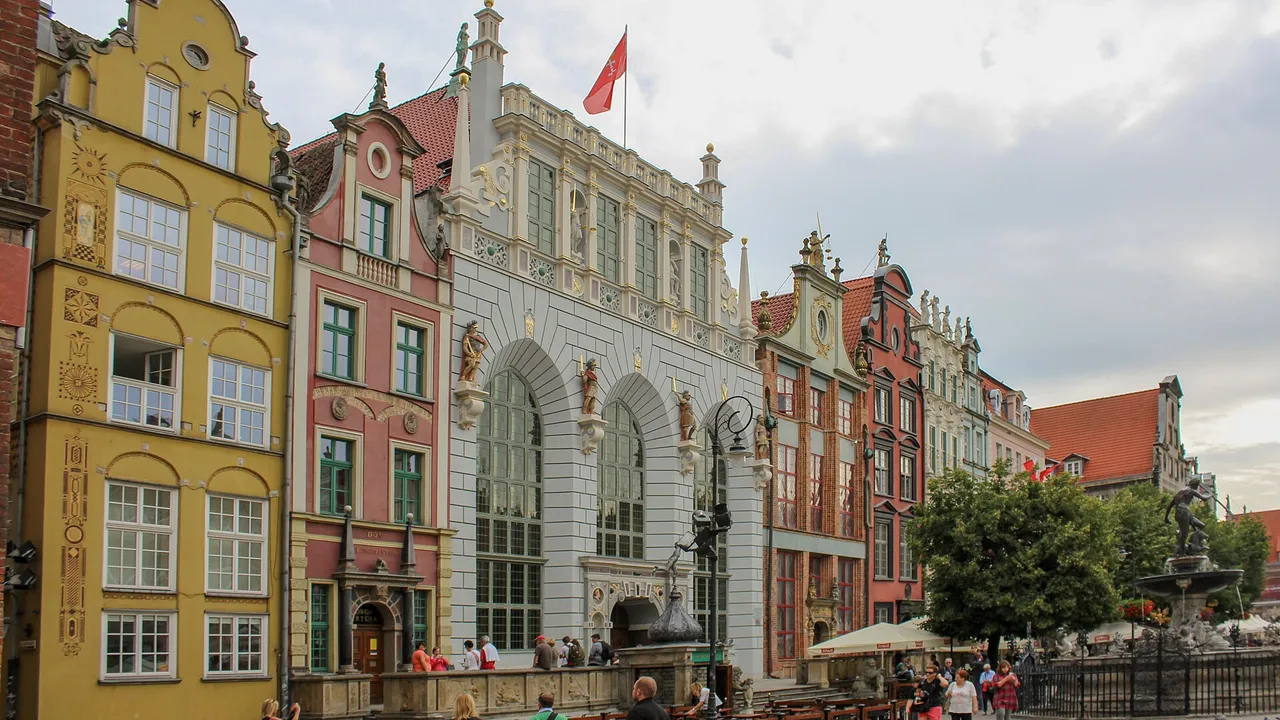
The Royal Way, St Mary’s Basilica and the Museum of the Second World War: a Baltic port city about 10 hours by bus.
Contents
Gdańsk in brief
Gdańsk is worth the journey for the Royal Way, St Mary’s Basilica and the Museum of the Second World War. From Vilnius a direct bus takes about 10 h 15 min, from Kaunas 8 h 45 min. So a weekend leaves Saturday and Sunday morning, and a longer weekend suits it even better.
In Gdańsk the clock is one hour behind Lithuania, so ticket times are local. You will find a full plan for two days in the guide a weekend in Gdańsk (in Lithuanian).
How to get there
From Vilnius by bus. On Friday, 6 November, the 09:25 direct FlixBus service arrives at 18:40 (10 h 15 min). The 21:05 night service arrives on Saturday at 06:30 (10 h 25 min). On Sunday, 8 November, the 10:05 service back arrives at 21:40. The 23:15 night service arrives on Monday at 09:50 (checked 2026-10-06; FlixBus). We described all the services in the guide Vilnius to Gdańsk by bus (in Lithuanian).
From Kaunas. On Friday, 6 November, the 10:55 FlixBus service arrives at 18:40 (8 h 45 min). On Sunday, 8 November, the 10:05 service back arrives at 20:10 (9 h 5 min; search, checked 2026-10-06; FlixBus). More trips: weekend trips from Kaunas (in Lithuanian).
From Klaipėda. There is no direct service; both services we checked have one change. On Friday, 6 November, the fastest leaves at 07:05 and is in Gdańsk at 18:40 (12 h 35 min), a ticket costs €53.99 per person. The cheapest is the 13:50 service, arriving on Saturday at 06:30 (17 h 40 min), for €52.19 per person (search for two adults, checked 2026-10-06; FlixBus).
We did not check trains to Gdańsk, so we do not write them. FlixBus adds a €0.99 service fee to the order. Look for cheaper tickets with the guide to cheap FlixBus tickets (in Lithuanian).
Getting around the city
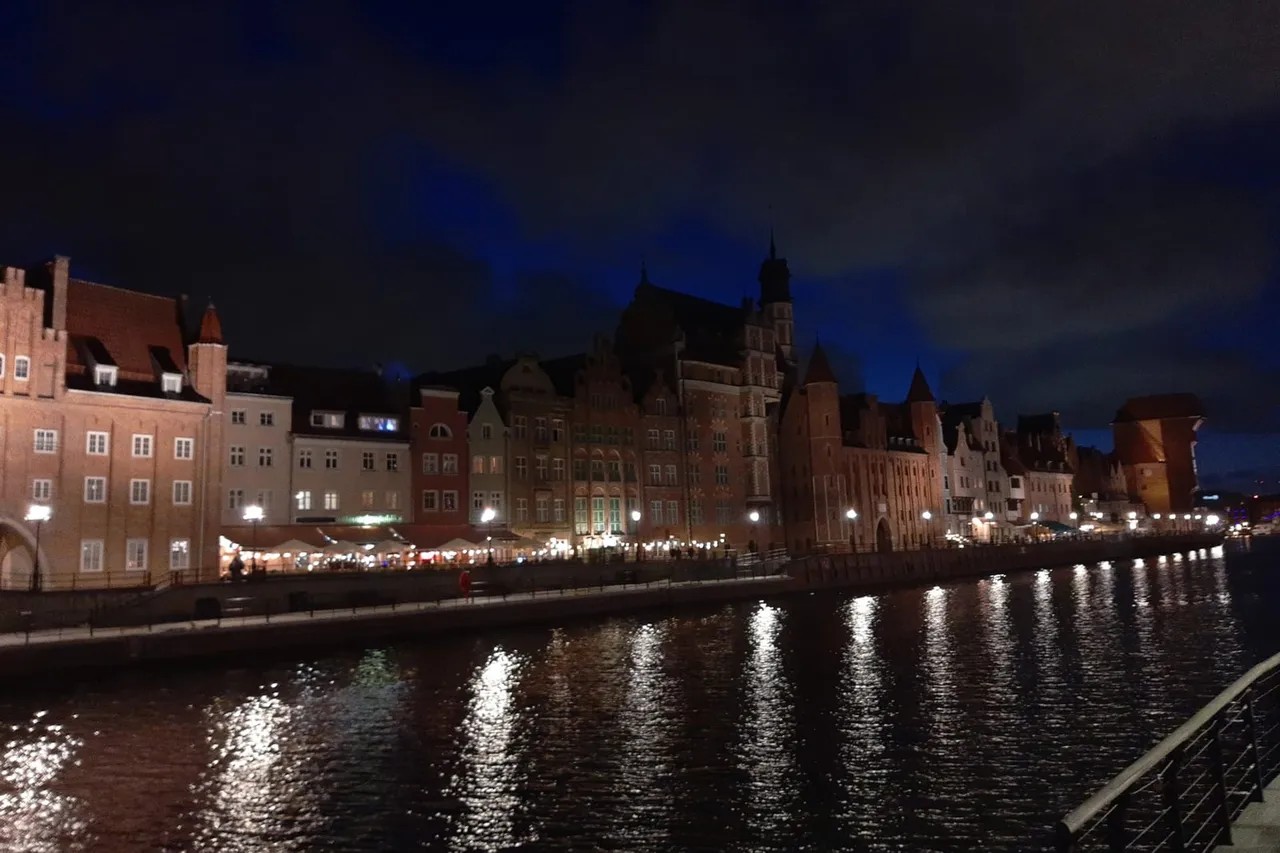
The old town is compact. From Gdańsk bus station to the Long Market it is about 1.5 km on foot (about 20 min), from Gdańsk Główny about 1.4 km (about 18 min). Distances from OpenStreetMap (checked 2026-10-06).
In the old town walking is usually enough, but for Oliwa or Wrzeszcz it is worth buying a ticket.
Districts and where to stay
The Gdańsk tourism website describes three districts (visitgdansk.com, in Lithuanian, checked 2026-10-06):
- The Main Town – here are the Royal Way and St Mary’s Basilica; it suits a short weekend.
- Wrzeszcz – a district of “eclectic late nineteenth-century houses”, small restaurants and cafés near the centre.
- Oliwa – one of the oldest districts of Gdańsk, with narrow streets and grand houses.
As an example, look at Hotel Wolne Miasto: on its website a double room with a large bed is shown “from 217 zł” a night (hotelwm.pl, checked 2026-10-08). This is a “from” price and may be higher for specific dates. How to choose: the guide to accommodation for a weekend (in Lithuanian).
What to see
The Long Market and the Royal Way. The Gdańsk tourism website says the road is so named because of the ceremonial entries of monarchs into the city (visitgdansk.com, in Lithuanian, checked 2026-10-06). You need no ticket to walk it.
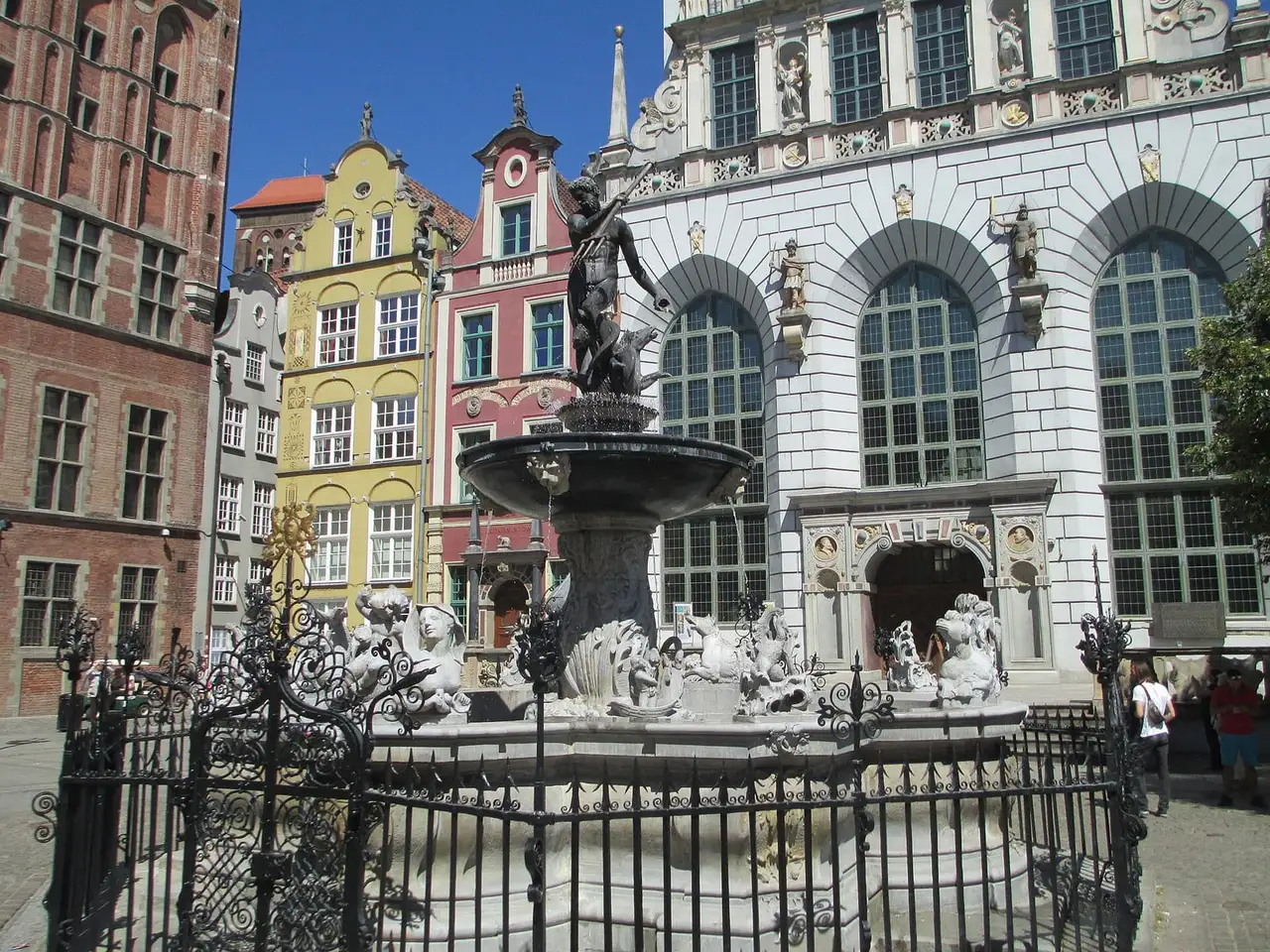
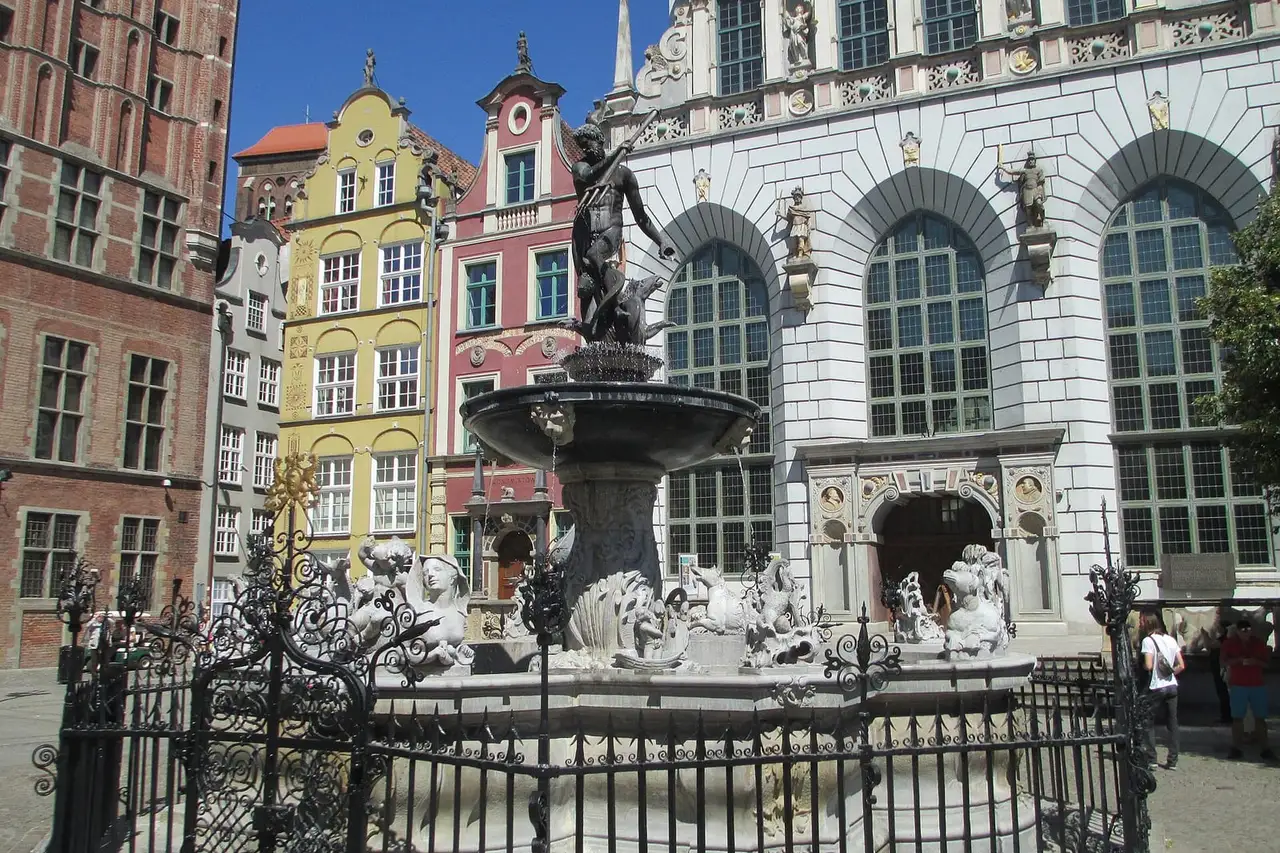
Royal Way and Neptune Fountain
An old town street with the Neptune Fountain and colourful buildings.
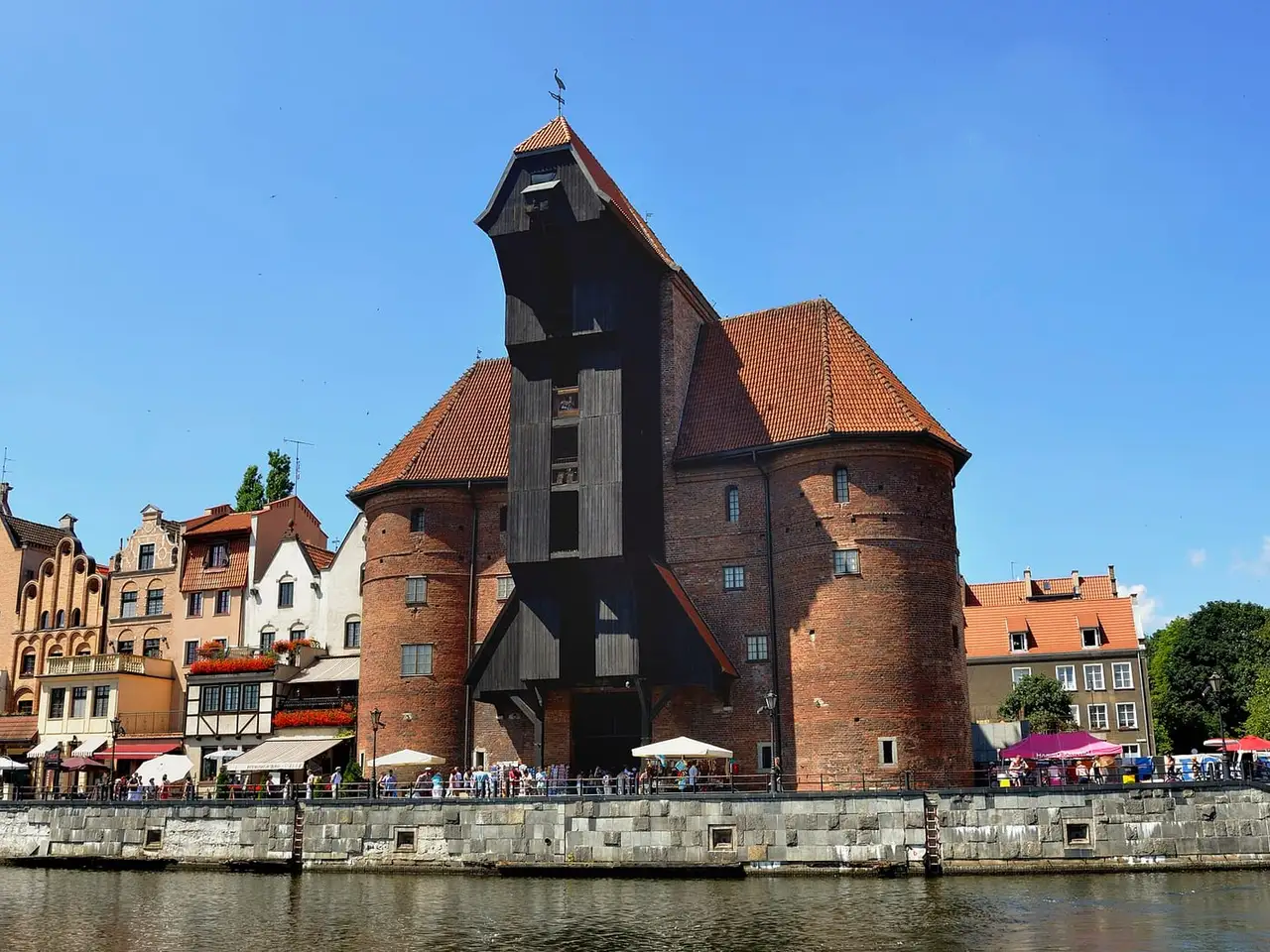
National Maritime Museum and the Crane
A maritime museum in Gdańsk; the photograph shows the Crane on the Motława quay.
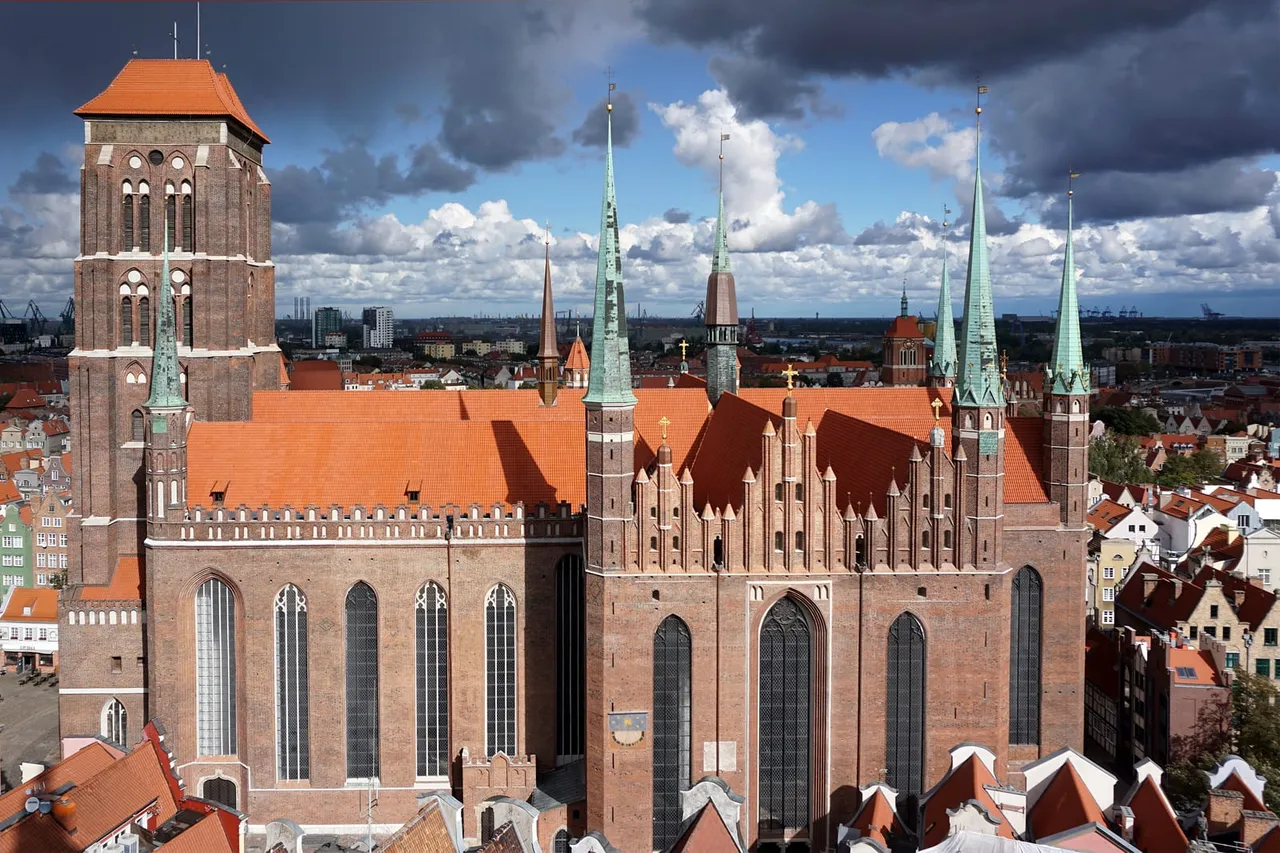
St Mary’s Basilica. The church’s website says it is the largest brick church in Europe. It is 105.2 m long, took 159 years to build and was begun in 1343. On weekdays it is open 8:30–17:30, on Sunday 11:00–12:00 and 13:00–17:30. The figures of the astronomical clock appear every day at 11:57. Entry to the tower costs 20 PLN (about €4.54; basilica, checked 2026-10-06).
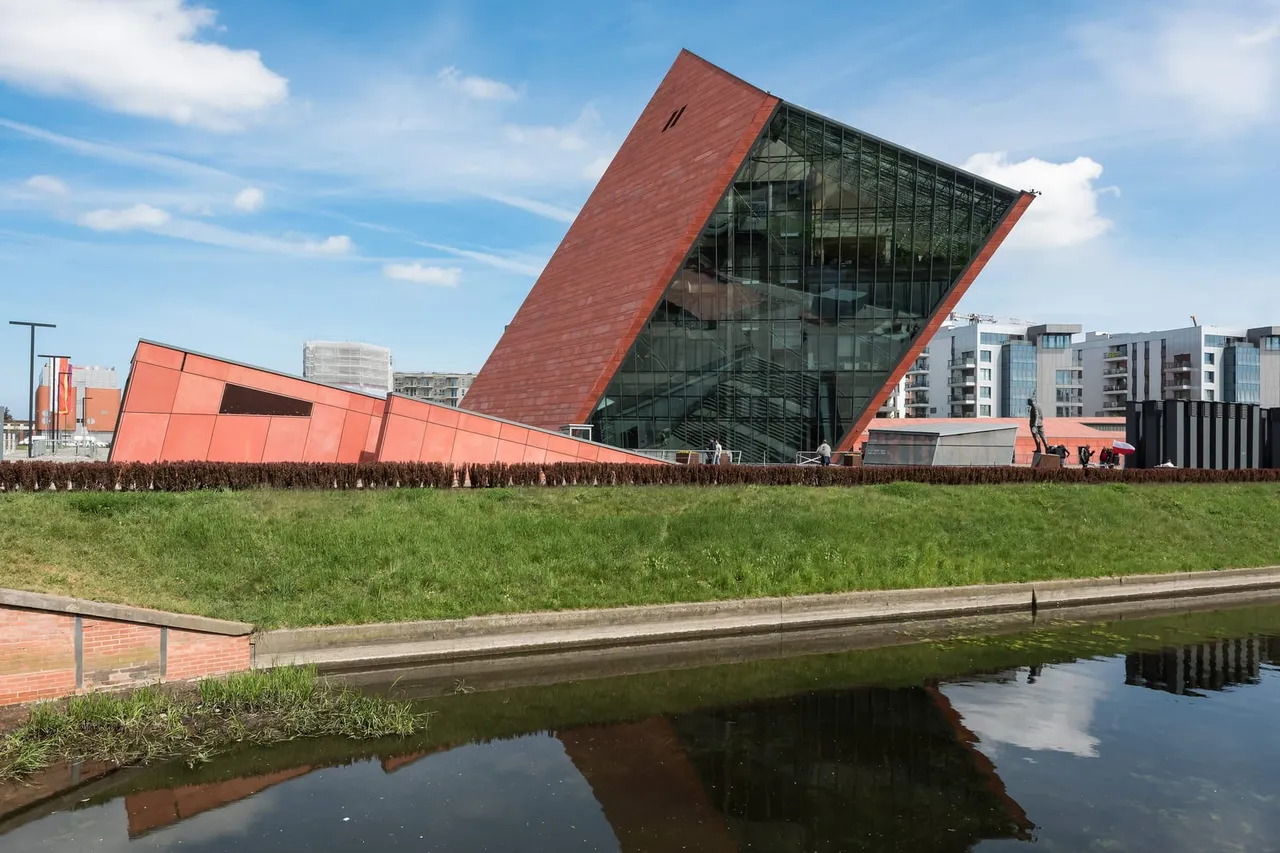
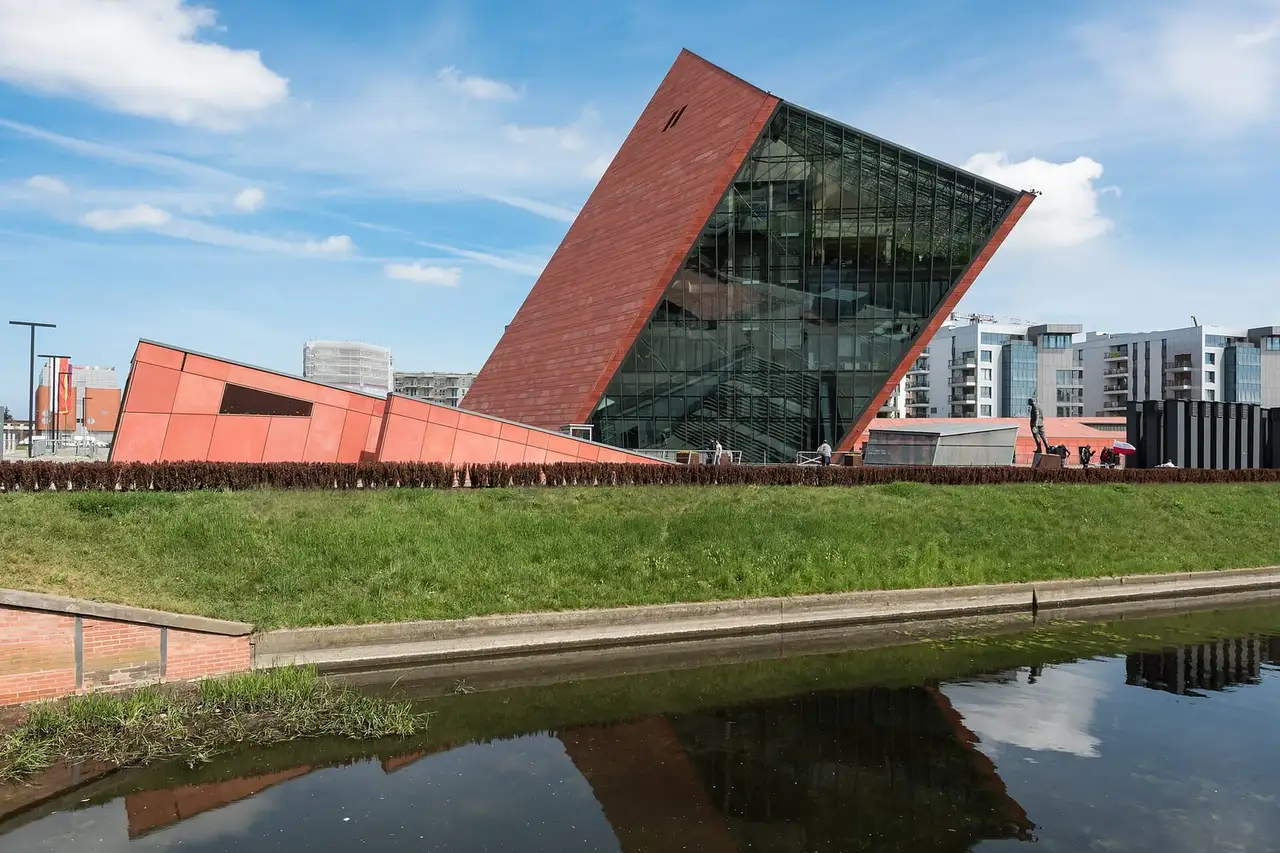
The Museum of the Second World War. Open Wednesday to Sunday 10:00–18:00 (ticket offices until 17:00), on Tuesday 10:00–16:00 with free entry, closed on Monday and on 1 November. A ticket to the main exhibition costs 33 PLN (about €7.48), an audio guide in Lithuanian 12 PLN (opening hours, tickets, checked 2026-10-08).
The European Solidarity Centre. The permanent exhibition “The Road to Freedom” tells the story of the events of August 1980 in Gdańsk. Its greatest treasure is the 21 demands boards, inscribed on UNESCO’s Memory of the World list. The exhibition also recalls December 1970, when 45 people died on the coast, and the martial law declared on 13 December 1981. Ten million Poles joined the Solidarity trade union (European Solidarity Centre, checked 2026-10-08).
Westerplatte. The attack on Westerplatte on 1 September 1939 is regarded as the symbolic beginning of the Second World War (visitgdansk.com, in Lithuanian, checked 2026-10-07).
You will find all the places in the categories: what to see in Gdańsk and what to do in Gdańsk.
What to do by season
Summer. The tourism website has separate pages on the beaches and on Sobieszewo Island, which it calls the “lungs of Gdańsk” (about 15 km from the centre; visitgdansk.com, in Lithuanian, checked 2026-10-06). We did not check real season dates and prices.
Winter and Christmas. We did not check the Christmas market dates on the organiser’s page, so we do not write them. You will find other holiday ideas in Christmas markets in Europe (in Lithuanian).
What to eat
In the “Tastes of Gdańsk” section of the Gdańsk tourism website, two restaurants present a local menu. Piwnica Rajców offers a menu inspired by historic recipes: fried Baltic herring in a spicy marinade, duck in chestnut sauce and bread pudding. Tygle Gdańskie serves bread with anchovy butter and has a Michelin recommendation (visitgdansk.com, in Lithuanian, checked 2026-10-06). We found no prices, so we do not write them.
Practical information
Currency. Poland pays in zlotys (PLN). On 28 October the NBP rate was 4.4090 PLN to €1 (NBP, checked 2026-10-29). When paying by card, choose to pay in zlotys. More: zloty or euro in Poland (in Lithuanian).
Tourist tax. The news agency PAP writes that Gdańsk’s local charge is 3.46 PLN a night from 1 January (PAP, checked 2026-10-06). We found no official city page. The charge is often not included in the accommodation price.
Documents and holidays. Before the trip read documents for travelling in the Baltic states and Poland (in Lithuanian). More Polish destinations: Warsaw, Kraków and weekend trips to Poland (in Lithuanian).
Weekend plan
Friday. Leave Vilnius at 09:25, and you will be in Gdańsk at 18:40. In the evening walk along the Royal Way.
Saturday. In the morning look into St Mary’s Basilica and be at the clock at 11:57. In the afternoon go to the Museum of the Second World War (ticket offices until 17:00), and in the evening have dinner with local cuisine.
Sunday. Leave Gdańsk at 10:05, and you will be in Vilnius at 21:40. If you want more time in the city, take the 23:15 service. For the full price for two, see the weekend guide (in Lithuanian).
FAQ
Is a weekend enough for Gdańsk?
Yes, if you arrive on Friday. A whole Saturday is left in the city, but the journey one way takes about 10 hours.
How long does the journey from Vilnius take?
The direct FlixBus service on 6 November takes 10 h 15 min–10 h 25 min.
Can I get to Gdańsk from Klaipėda?
Yes, but only with a change: the fastest service we checked takes 12 h 35 min and costs €53.99 per person.
What is the currency in Gdańsk?
The zloty (PLN).
Things to see and do in Gdańsk


By car: distance, time, fuel
By car
- From Vilnius: 610 km, 6 h 11 min one way. Fuel there and back: €154.72 per car, €77.36 each for two people.Calculation: 2 × 610 km = 1,220 km; 1,220 km ÷ 100 × 6.5 l/100 km = 79.3 l; 79.3 l × 1.951 €/l = €154.72.
- From Kaunas: 505 km, 5 h 13 min one way. Fuel there and back: €128.09 per car, €64.05 each for two people.Calculation: 2 × 505 km = 1,010 km; 1,010 km ÷ 100 × 6.5 l/100 km = 65.65 l; 65.65 l × 1.951 €/l = €128.09.
- From Klaipėda: 716 km, 6 h 59 min one way. Fuel there and back: €181.60 per car, €90.80 each for two people.Calculation: 2 × 716 km = 1,432 km; 1,432 km ÷ 100 × 6.5 l/100 km = 93.08 l; 93.08 l × 1.951 €/l = €181.60.
From Šiauliai, Panevėžys is not calculated yet: we do not have map data for this route.
In Poland only the concession sections are tolled (A2 Świecko–Konin, A4 Katowice–Kraków); the A1 is free: what it costs (in Lithuanian).
This is an approximate calculation, not a price. Travel time without traffic or border queues. Fuel price: Lithuanian average, Euro-super 95 with taxes, 2026-10-19, the European Commission's Weekly Oil Bulletin (CC BY 4.0); consumption 6.5 l/100 km. Routes: MOTIS, car profile, no traffic conditions, © OpenStreetMap contributors (ODbL), Geofabrik extracts, calculated 2026-10-29. There are no road tolls for passenger cars in Lithuania, Latvia and Estonia; for Poland, see here (in Lithuanian).