A weekend in Plungė
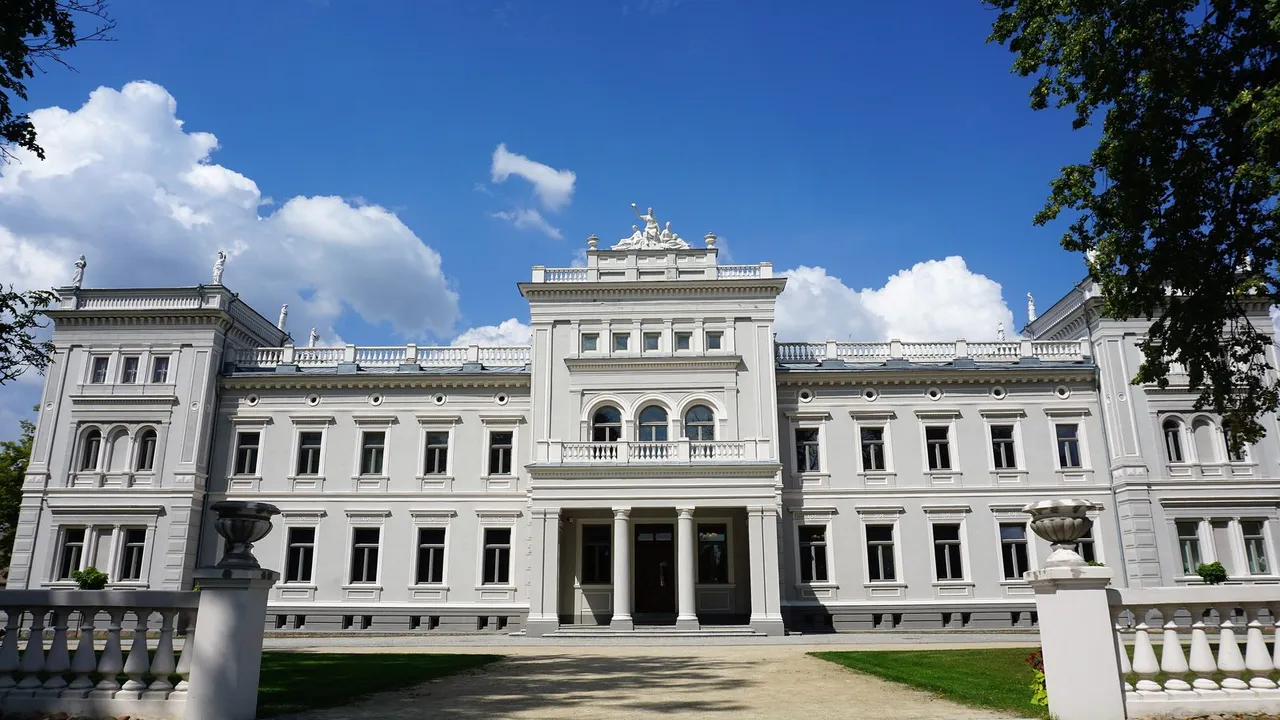
The Oginski Palace with the Samogitian Art Museum and a 45 ha park in Samogitia, 45–60 minutes by train from Klaipėda.
Contents
Plungė in brief
Plungė is in north-western Lithuania, in Samogitia, on both sides of the Babrungas. In 2023 the town had 17 385 inhabitants (Lithuanian Universal Encyclopedia, in Lithuanian). It is worth coming to Plungė for the Oginski Palace: Prince Mykolas Oginskis had it consecrated in 1879, and since 1994 the Samogitian Art Museum has operated in it.
The town is small, so you will walk round the palace, the park and the centre in a day. From Klaipėda you arrive by train in less than an hour.
How to get there
Prices are per adult, with the LTG Link 50% discount on local routes (valid for journeys 9 October–31 December, terms, in Lithuanian), on Saturday 7 November, checked 2026-10-29 (LTG Link, in Lithuanian).
- From Klaipėda. Direct trains take 45–60 min. They leave at 05:45, 07:33, 09:16, 12:18, 15:35 and 18:12. The 07:33 → 08:18 service costs €3.65 (2nd class), 09:16 → 10:14 costs €2.90 (3rd class), 12:18 → 13:06 costs €2.00 (3rd class). Back they leave at 07:39 (08:39), 10:33 (11:19), 13:43 (14:39), 16:51 (17:36) and 22:38 (23:23); the 16:51 service costs €3.65 (2nd class, search, in Lithuanian).
- From Vilnius. Direct trains 06:38 → 10:32 (€6.55, 3rd class), 13:03 → 16:50 and 18:48 → 22:37 (€11.85 each, 2nd class) (search, in Lithuanian).
- From Kaunas. Direct services 13:30 → 17:05 and 17:00 → 20:14 (national timetable data, checked 2026-10-23); the base fare of the second is €12.80.
By car Plungė is about 58 km from Klaipėda (57 min), 193 km from Kaunas (2 h 14 min) and 287 km from Vilnius (3 h 14 min) on free roads (routing service, checked 2026-10-07). Buy tickets following the train ticket instructions, and people from Klaipėda will also find the Vilnius–Klaipėda comparison useful.
Getting around the city
From the railway station to the museum you walk about 930 m (12 min), from the bus station about 900 m (12 min). The centre is compact, and you need no city transport.
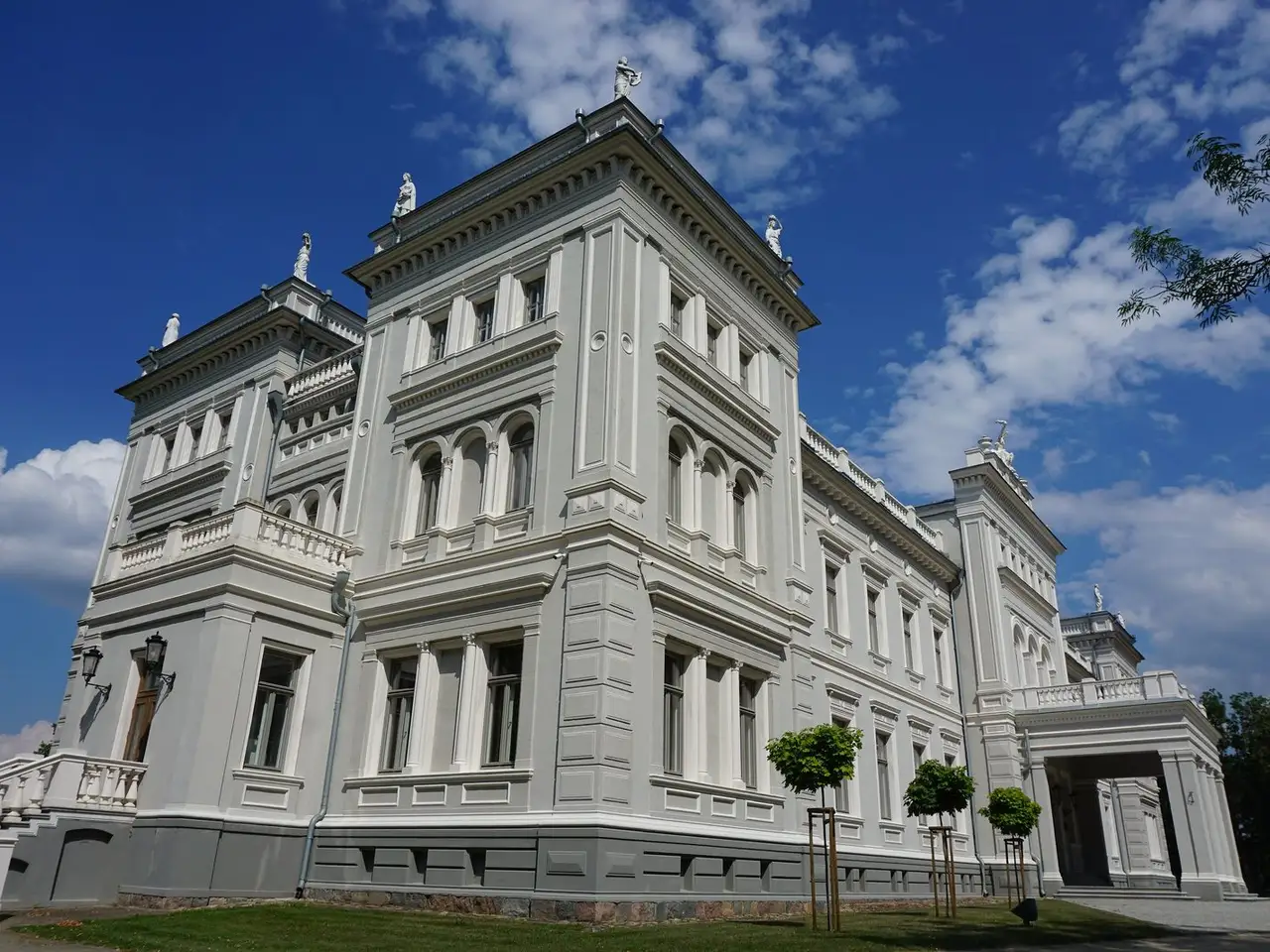
Samogitian Art Museum
A museum in the Oginski Palace in Plungė: works by émigré artists, folk art and the history of the manor.
What to see
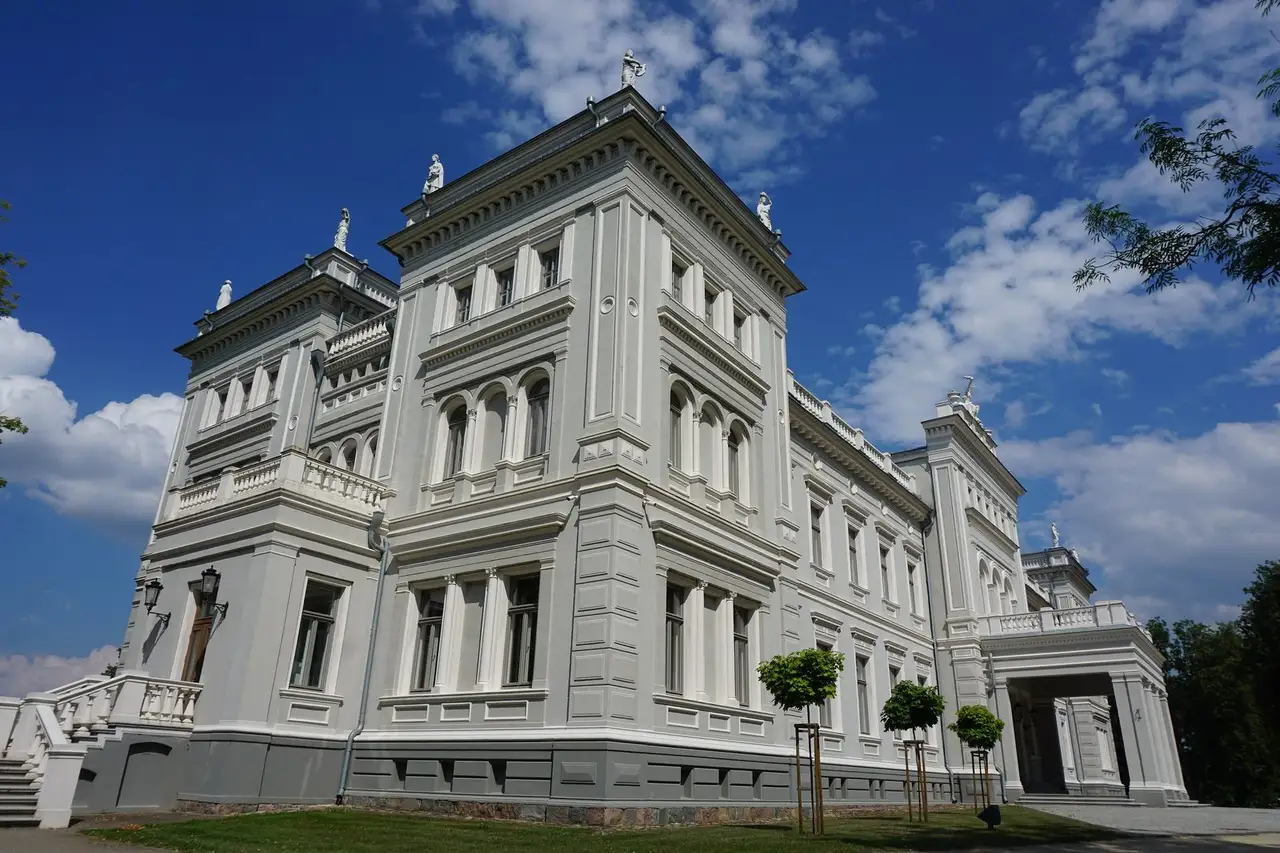
The Oginski Palace. The neo-Renaissance palace was built by the Oginskis to a design by the German architect Karl Lorenz. The roof is decorated with sculptures in the antique style. The palace interiors were restored in 2012–2015 (museum website, in Lithuanian, checked 2026-10-07). The painter and composer Mikalojus Konstantinas Čiurlionis studied here (museum website, in Lithuanian).
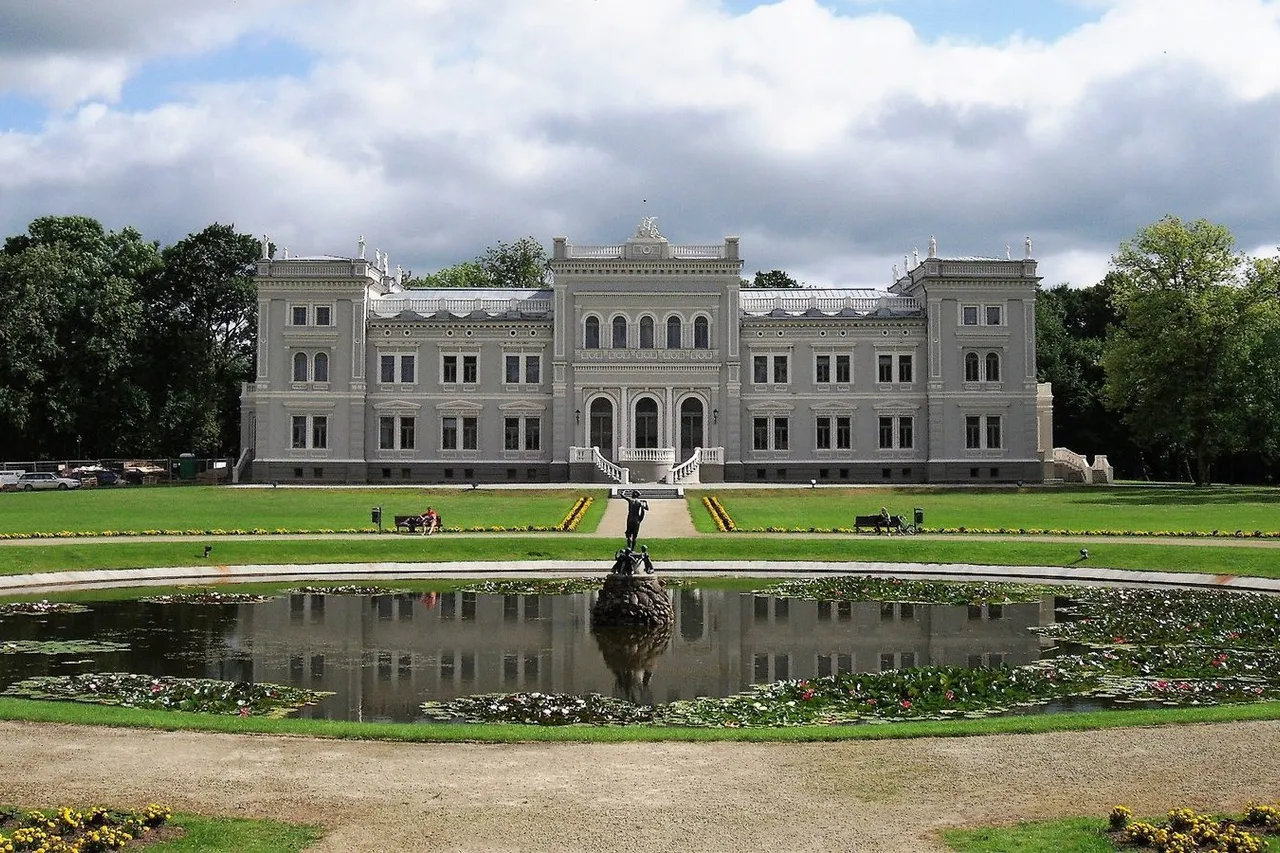
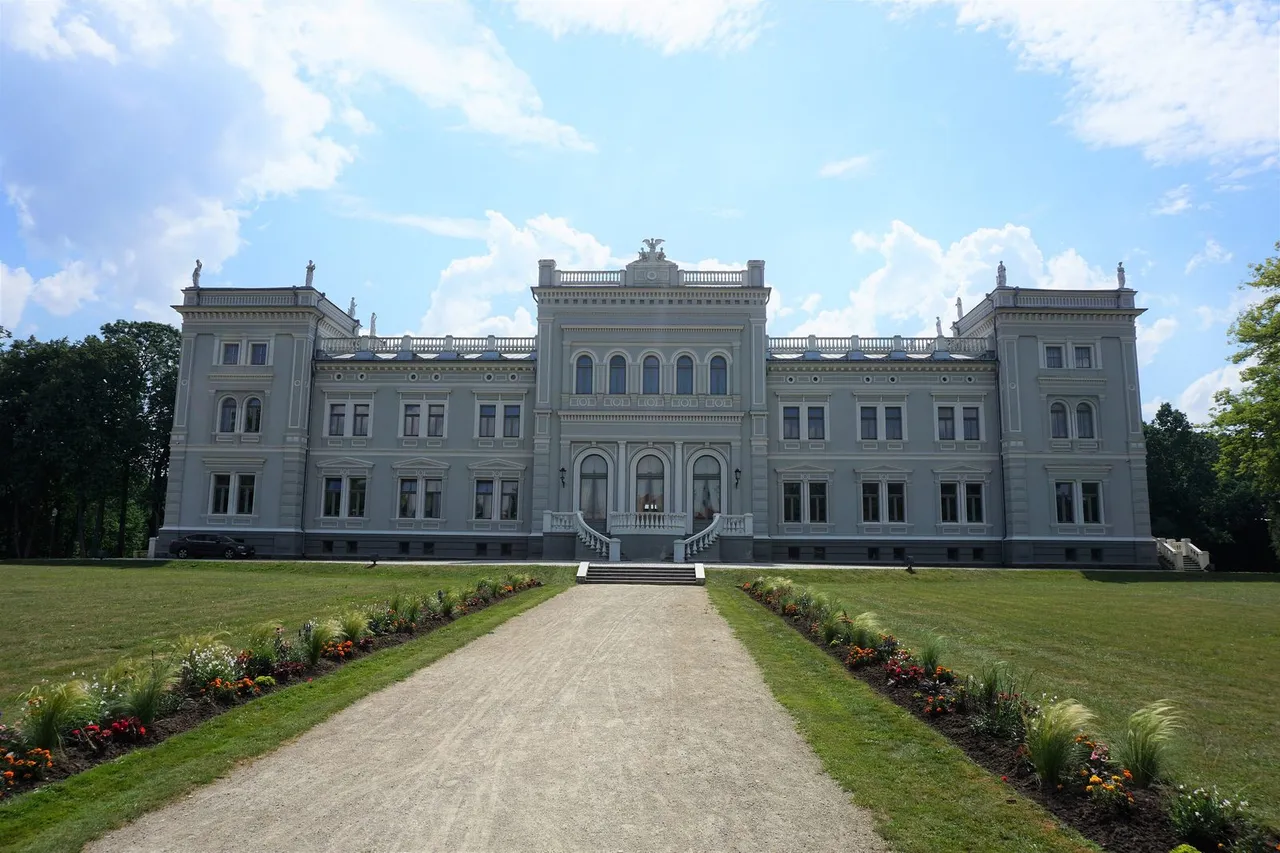
The Samogitian Art Museum. The collections consist of paintings and graphics by émigré artists, folk art, nineteenth-century folk art and material on the past of the Plungė region (VLE, in Lithuanian, checked 2026-10-07).
The history of the manor. In 1806 the Plungė manor passed to Count Platon Zubov, and in 1873 Prince Mykolas Oginskis bought it. He founded the manor orchestra school, financed the publication of Lithuanian books, and in 1899 the first Lithuanian play staged in Palanga (manor history, Prince M. Oginskis, both in Lithuanian, checked 2026-10-07).
The outbuildings, the stables and the tower. Next to the palace stand two outbuildings, the neo-Gothic stables and the clock orangery dated 1846: the oldest surviving manor structure, it recalls the Palazzo Vecchio in Florence. After its restoration in 2012 the municipal public library moved in. In the stables the international Mykolas Oginskis classical music festivals are held every year, and at the entrance stand the neo-Renaissance “white gates” of 1879 (Plungė manor estate, in Lithuanian, checked 2026-10-07).
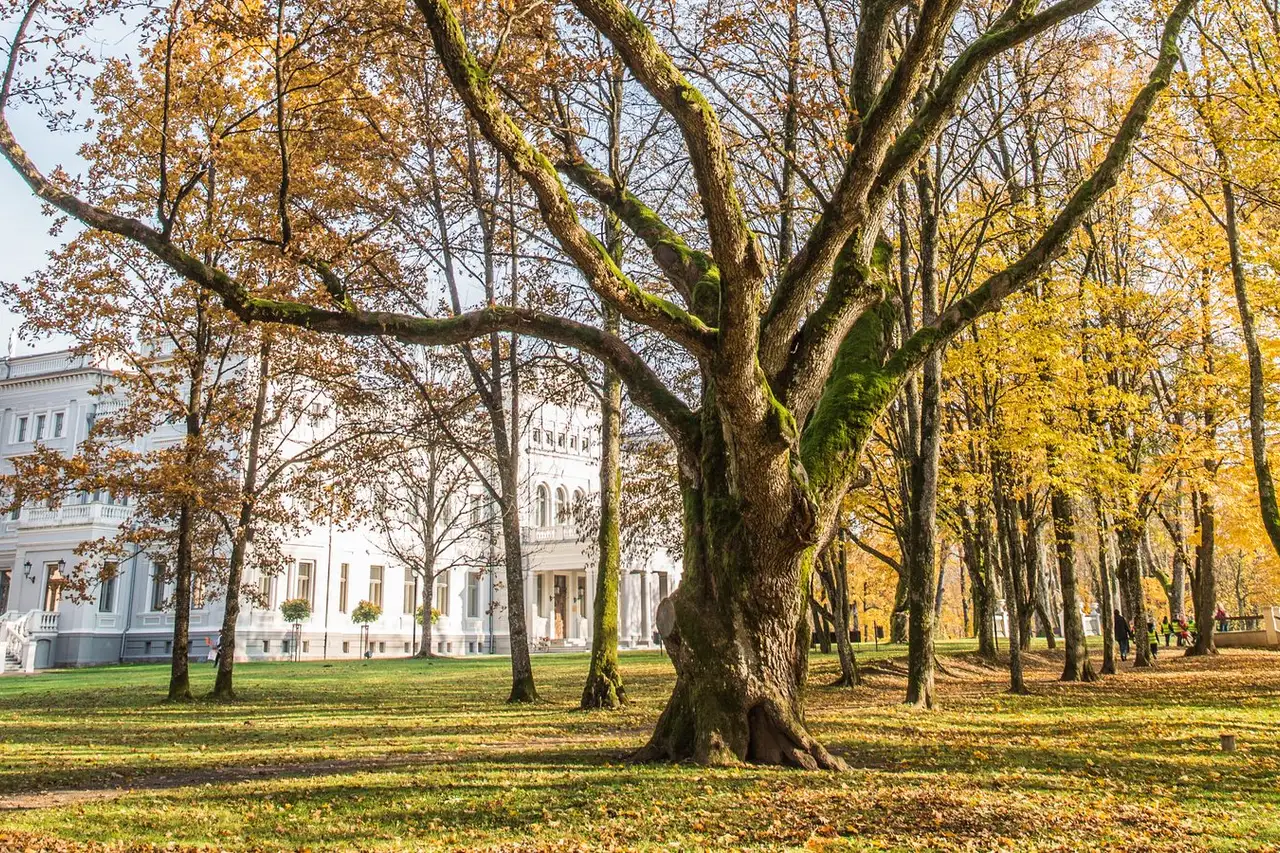
The Oginski Palace park. The mixed-type park was laid out in the eighteenth–nineteenth centuries and has seven cascade ponds dug in it. The pride of the park is the Perkūnas Oak, a protected natural monument whose trunk is about 1.6 m thick (museum website, in Lithuanian, checked 2026-10-07).
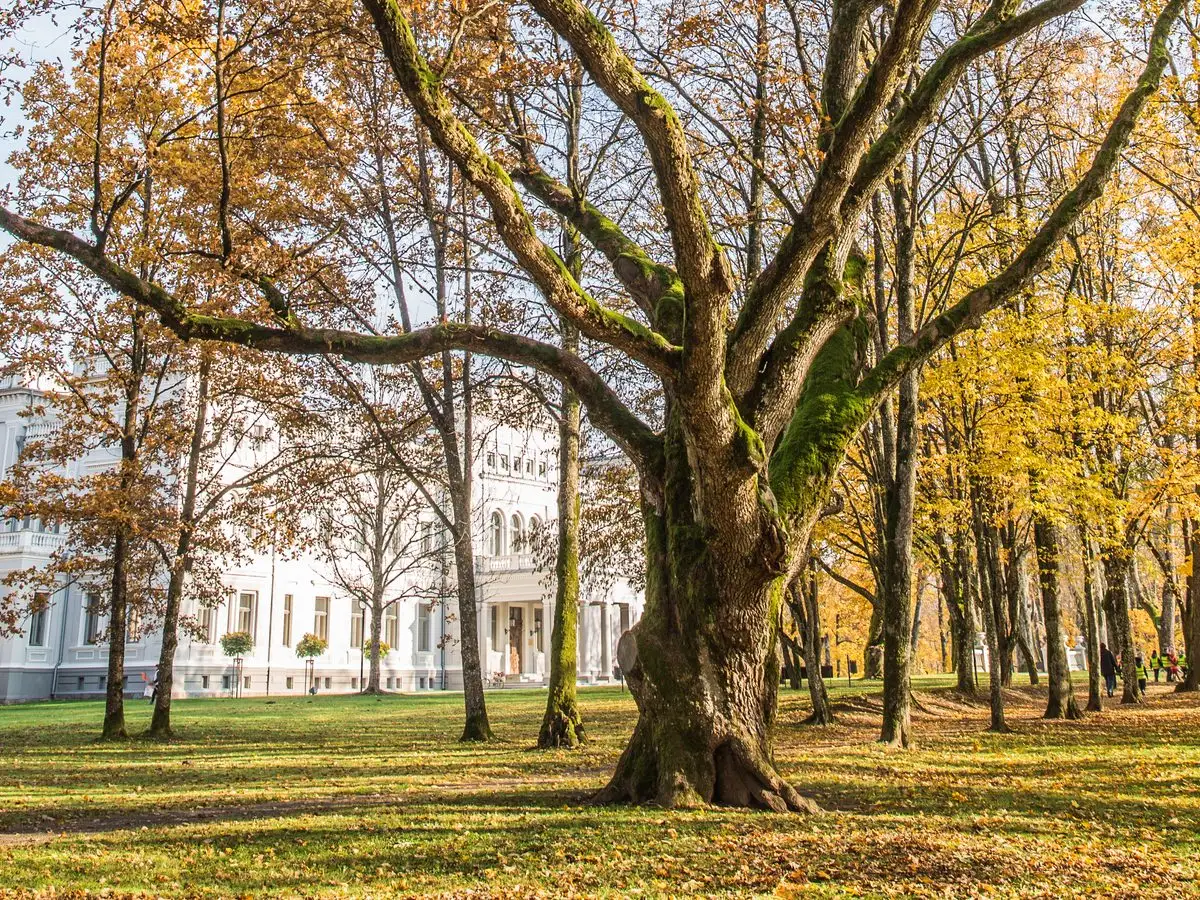
Oginski Palace Park
An eighteenth- and nineteenth-century park with seven ponds and the Perkūnas Oak by the Oginski Palace in Plungė.
The Žemaitė Memorial Museum. The writer Žemaitė was born in the Bukantė manor house in the village of Godeliai. A memorial exhibition was set up in her birthplace in 1965, in the granary works by the craftsman Stanislovas Riauba, and in the rebuilt barn a collection of Samogitian cross-suns and small saints’ sculptures (museum website, in Lithuanian, checked 2026-10-07). The museum’s address is Godelių village, Šateikiai elderate, and the navigation suggests entering Kadaičiai village (how to find us, in Lithuanian).
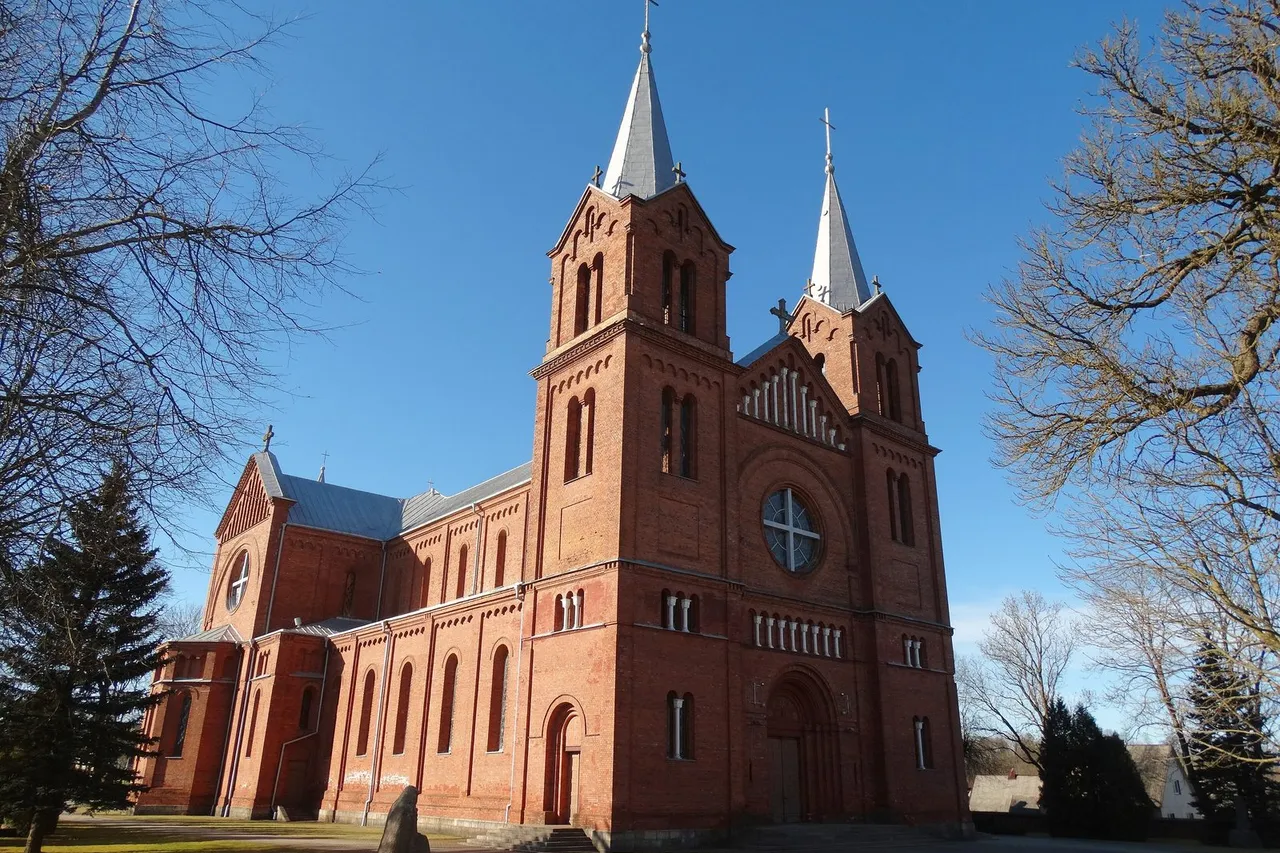
The Church of St John the Baptist. The neo-Romanesque church was built in 1933, and beside it stands a bell tower of 1850 with a brass bell of 1646 (VLE, in Lithuanian, checked 2026-10-07).
Practical information
- Palace opening hours. From 1 October to 30 April Tuesday to Sunday 10:00–17:00, from 1 May to 30 September, 10:00–19:00; closed on Monday. The last visitors are admitted half an hour before closing, and before holidays it is open one hour less (opening hours, in Lithuanian, checked 2026-10-08).
- Tickets. €6 for an adult, €3 for a pupil, student or senior, €14 for a family (2 adults and 1–3 children); free for pre-schoolers and people with disabilities. Driving a car into the park territory costs €15 (prices, in Lithuanian, checked 2026-10-08).
- The Žemaitė Memorial Museum is a branch in the village of Godeliai, not in town; from October to April it is open Tuesday to Saturday 10:00–17:00, closed on Sunday and Monday (opening hours, in Lithuanian, checked 2026-10-08).
- Accommodation charge. We did not check Plungė’s charge; read about the charges of other Lithuanian towns in the tourist tax article.
Weekend plan
Saturday, 7 November. Take the 09:16 train from Klaipėda, and you are in Plungė at 10:14. From the station to the palace walk 930 m (12 min), so you will be at the museum about 10:30. From October to April the palace is open 10:00–17:00. Before lunch see the palace and the museum. Have lunch at the restaurant “Flow” (Dariaus ir Girėno g. 10), open on Saturday 11:00–22:00 (“Flow”, in Lithuanian, checked 2026-10-28). Then see the ponds and the Perkūnas Oak in the park, and in the late afternoon the Church of St John the Baptist. Leave for the station about 16:25 and return on the 16:51 train, in Klaipėda at 17:36 (LTG Link, in Lithuanian, checked 2026-10-16). To stay longer, spend the night and return on Sunday: on 8 November trains to Klaipėda leave at 10:33, 13:43, 16:51 and 22:38 (LTG Link, in Lithuanian, checked 2026-10-16).
Look for similar trips in the lists of trips from Klaipėda (in Lithuanian), trips from Kaunas (in Lithuanian) and trips from Vilnius (in Lithuanian). Nearby you will also find the pages of Klaipėda and Šiauliai.
FAQ
Can I get from Klaipėda without a change? Yes, by train in 45–60 min.
Is one day enough in Plungė? Yes. On 7 November trains to Klaipėda leave at 07:39, 10:33, 13:43, 16:51 and 22:38, so arriving at 10:14 you will have more than 6 h for the palace, the museum and the park (checked 2026-10-16).
How much is the museum? €6 for an adult, €3 for a pupil, student or senior.
Things to see and do in Plungė


By car: distance, time, fuel
By car
- From Vilnius: 286 km, 2 h 46 min one way. Fuel there and back: €72.54 per car, €36.27 each for two people.Calculation: 2 × 286 km = 572 km; 572 km ÷ 100 × 6.5 l/100 km = 37.18 l; 37.18 l × 1.951 €/l = €72.54.
- From Kaunas: 192 km, 1 h 54 min one way. Fuel there and back: €48.70 per car, €24.35 each for two people.Calculation: 2 × 192 km = 384 km; 384 km ÷ 100 × 6.5 l/100 km = 24.96 l; 24.96 l × 1.951 €/l = €48.70.
- From Klaipėda: 57 km, 1 h 1 min one way. Fuel there and back: €14.46 per car, €7.23 each for two people.Calculation: 2 × 57 km = 114 km; 114 km ÷ 100 × 6.5 l/100 km = 7.41 l; 7.41 l × 1.951 €/l = €14.46.
From Šiauliai, Panevėžys is not calculated yet: we do not have map data for this route.
This is an approximate calculation, not a price. Travel time without traffic or border queues. Fuel price: Lithuanian average, Euro-super 95 with taxes, 2026-10-19, the European Commission's Weekly Oil Bulletin (CC BY 4.0); consumption 6.5 l/100 km. Routes: MOTIS, car profile, no traffic conditions, © OpenStreetMap contributors (ODbL), Geofabrik extracts, calculated 2026-10-29. There are no road tolls for passenger cars in Lithuania, Latvia and Estonia; for Poland, see here (in Lithuanian).